
Discover the best Photographic Safari Experiences in Tanzania, from Serengeti and Ngorongoro to Tarangire and Nyerere, with wildlife and photography tips.
Tanzania is one of Africa’s most rewarding destinations for wildlife photography, offering a remarkable combination of wildlife, dramatic landscapes, diverse ecosystems and unforgettable moments in the wilderness. From lions resting beneath acacia trees in the Serengeti to elephants moving between ancient baobabs in Tarangire, a Tanzania photographic safari gives travelers the opportunity to experience the natural world while creating lasting images of their journey.
Unlike a traditional safari where the primary objective may simply be to see as many animals as possible, a photographic safari in Tanzania places greater emphasis on observing wildlife carefully, understanding animal behaviour, finding interesting compositions and making the most of changing light and landscapes.
Tanzania’s national parks officially recognize photographic safaris as one of the activities available to visitors, alongside game drives, walking safaris, birdwatching and other wilderness experiences.
At Animalia Treks and Safaris, we can help travelers design safari experiences around their photographic interests, whether you are an enthusiastic beginner with a mirrorless camera or an experienced wildlife photographer looking for more time in the field.
What Is a Photographic Safari?
A photographic safari is a wildlife-focused safari designed around the experience of observing and photographing animals, birds, landscapes and other aspects of the natural environment.
The difference is often found in the pace and approach rather than the destination itself.
Instead of rushing from one wildlife sighting to another, a photographic safari allows more time to observe what is happening around you. A lion may initially appear to be simply resting, but after watching for a while it may stand, yawn, interact with another lion or begin moving across the plains. Those moments can produce much more interesting photographs than simply taking a picture of an animal sitting still.
Light is equally important.
Early morning and late afternoon can create softer light, longer shadows and atmospheric landscapes, while cloudy conditions can sometimes produce dramatic skies and reduce harsh contrast. A good photographic safari therefore considers not only where wildlife is found, but also when the light and conditions are most interesting for photography.

Why Tanzania Is Ideal for Wildlife Photography
Tanzania’s greatest photographic advantage is the variety of experiences available within one country.
The northern safari circuit combines destinations such as Serengeti National Park, Ngorongoro Conservation Area and Tarangire National Park, each offering different scenery and wildlife opportunities. The Tanzania Tourist Board currently highlights this northern circuit for its Serengeti plains, Ngorongoro landscapes and Tarangire elephant and baobab scenery.
Further south, destinations such as Nyerere National Park and Ruaha National Park provide a different photographic atmosphere, with larger wilderness landscapes, river systems, woodland and opportunities to photograph wildlife in less familiar settings.
This diversity means that a Tanzania photography safari does not have to be limited to the famous Big Five. Landscapes, birds, elephants, giraffes, zebras, wildebeest, predators, primates and even small details such as tracks, plants and insects can all become part of the photographic story.
Serengeti National Park for Photography
The Serengeti is one of Tanzania’s most iconic destinations for wildlife photography.
Its enormous grasslands create opportunities for photographing animals against open horizons, while scattered trees and rocky outcrops can provide natural backgrounds and elevated viewpoints.
The park is particularly famous for large-scale wildlife spectacles, including the annual movements of wildebeest and other grazing animals. TANAPA identifies the Serengeti as a destination for game viewing, walking safaris and ballooning, while its park information highlights the diversity of classic African wildlife found there.
For photographers, however, the Serengeti is about much more than migration.
Lions resting in golden grass, cheetahs scanning the plains, leopards in trees, elephants crossing open country and large herds moving across the horizon can all create different photographic opportunities.
The wide landscapes are also ideal for environmental wildlife photography, where the animal is shown as part of its surroundings rather than filling the entire frame.
The Great Wildebeest Migration and Photography
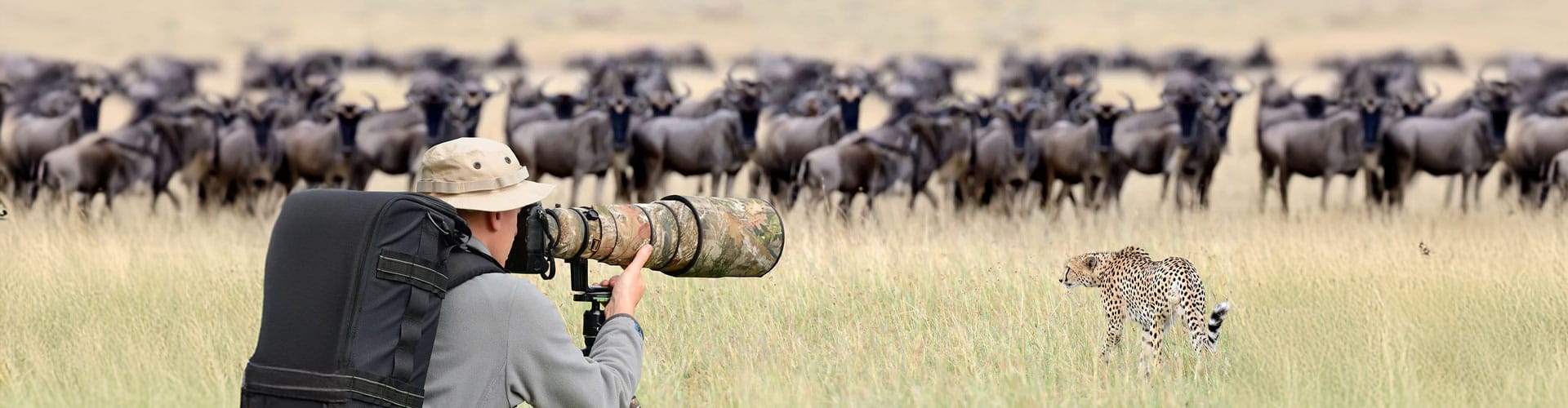
For wildlife photographers, the Great Wildebeest Migration can provide some of Tanzania’s most dramatic photographic opportunities.
The movement of huge herds across the Serengeti creates images that communicate scale, movement and the relationship between wildlife and landscape.
However, migration photography is not only about dramatic river crossings.
The animals’ movement across the plains, interactions between individuals, predator activity, dust, changing weather and moments of rest can all tell different stories.
Timing is therefore an important part of planning a photography safari around the migration. Wildlife movement is influenced by rainfall and grazing conditions, so specific sightings cannot be guaranteed on a particular date.
Ngorongoro Crater Photography
Ngorongoro offers a very different photographic environment.
The crater’s enclosed landscape provides a dramatic setting where grasslands, woodland, wetlands and wildlife come together within a relatively compact area.
From the crater rim, the landscape itself can become a major photographic subject. Once inside the crater, photographers can look for opportunities involving large mammals, birds and the relationship between wildlife and the distinctive volcanic surroundings.
The combination of scenery and wildlife makes Ngorongoro particularly useful for travelers who want a photographic safari that includes both animal portraits and landscape photography.
Tarangire National Park Photography
Tarangire is especially attractive to photographers who enjoy combining wildlife with distinctive landscapes.
The park is known for its elephants and impressive baobab trees. TANAPA describes Tarangire as having notable elephant concentrations and a characteristic baobab-studded landscape.
This combination creates opportunities for photographs that immediately communicate a sense of place.
An elephant walking beneath a large baobab, a giraffe silhouetted against the evening sky or a herd of zebra moving through golden grass can produce very different images from the open plains of the Serengeti.
Tarangire can therefore be an excellent addition to a northern Tanzania photography itinerary.
Lake Manyara for Wildlife and Bird Photography
Lake Manyara National Park provides another interesting environment for photographers, particularly those interested in birds, forest landscapes and wildlife around water.
The park’s combination of groundwater forest, open areas and lake environments creates varied photographic backgrounds.
Bird photographers can also find opportunities to photograph waterbirds and other species associated with the park’s different habitats.
Because photographic interests vary considerably between travelers, Animalia can help incorporate Lake Manyara into an itinerary when birdlife, landscapes or a particular wildlife interest is an important part of the trip.
Nyerere National Park for Photographic Safaris
For travelers looking beyond the northern circuit, Nyerere National Park offers a very different photography experience.
The Rufiji River and its surrounding floodplains, lakes and woodland create opportunities to photograph wildlife from different perspectives.
TANAPA highlights game drives and photographic safaris in Nyerere, with lions, elephants, buffalo, giraffes, leopards, hyenas and African wild dogs among the wildlife found in the park. It also offers boat experiences along the Rufiji River, creating opportunities for river-based photography.
The combination of land and water makes Nyerere particularly interesting for photographers who want to move beyond the traditional safari vehicle experience.
A photograph of a hippo emerging from the water, an elephant near the riverbank or birds flying across a sunset landscape can provide a very different visual story from a conventional game-drive photograph.

Ruaha National Park Photography
Ruaha is another destination worth considering for a more expansive southern Tanzania photography experience.
The park is known for its large landscapes and diverse wildlife, including elephants, lions, giraffes, buffalo and a variety of bird species.
Its woodland and open landscapes can produce excellent environmental wildlife photographs, particularly when the composition includes both the animal and its surroundings.
Ruaha can also be combined with Nyerere for travelers who have more time and want to explore the southern safari circuit.
The Best Time for a Tanzania Photography Safari
There is no single month that is perfect for every type of photography.
The best time depends on what you want to photograph.
Dry periods can make wildlife easier to locate in some areas because animals may concentrate around remaining water sources and vegetation can become less dense. The landscape can also provide clearer views of wildlife.
The greener months, meanwhile, can bring fresh vegetation, dramatic skies and excellent opportunities for bird photography.
For migration photography, the timing should be planned around the expected movement of the herds, while recognizing that wildlife follows environmental conditions rather than a fixed calendar.
TANAPA’s current trip-planning information similarly encourages visitors to match the season to wildlife movements and weather conditions.
For a photography-focused itinerary, the best approach is therefore to start with what you want to photograph and then select the destinations and travel period around those interests.
Early Morning Photography on Safari
Early morning is one of the most rewarding periods for wildlife photography.
The light is generally softer than during the middle of the day, while many animals are active after the cooler nighttime hours.
This can be an excellent time for photographing predators, herbivores moving across open landscapes, birds and atmospheric scenery.
The combination of low-angle light, mist, dust and wildlife movement can also create images with considerable depth and atmosphere.
For this reason, photographers often appreciate having the flexibility to leave camp early rather than waiting for a later morning departure.
Golden Hour and Sunset Photography
Late afternoon offers another important photographic window.
As the sun becomes lower, the light becomes warmer and shadows become longer. Wildlife silhouettes, backlighting and golden landscapes can become particularly effective subjects.
A giraffe standing against the setting sun or elephants moving through dusty grass can create a very different photograph from the same scene at midday.
The goal is not necessarily to photograph every animal during perfect light. Instead, a good photographic guide can help position the vehicle and anticipate how the light may interact with the subject.
Wildlife Photography Is About Patience
One of the biggest differences between ordinary sightseeing and wildlife photography is patience.
Animals do not follow a script.
You may spend twenty minutes watching a lion sleeping before suddenly seeing it become active. A leopard may remain hidden before briefly appearing through vegetation. A herd of elephants may slowly approach a water source, creating a photographic sequence that develops over time.
Rather than constantly searching for the next sighting, photographers often benefit from staying with an interesting subject and observing its behaviour.
This is where an experienced safari guide can make a major difference.
Choosing the Right Camera for a Tanzania Safari
You do not need the most expensive camera to enjoy a photographic safari.
Modern mirrorless and DSLR cameras can produce excellent wildlife images, while even advanced compact cameras and some smartphones can capture memorable moments.
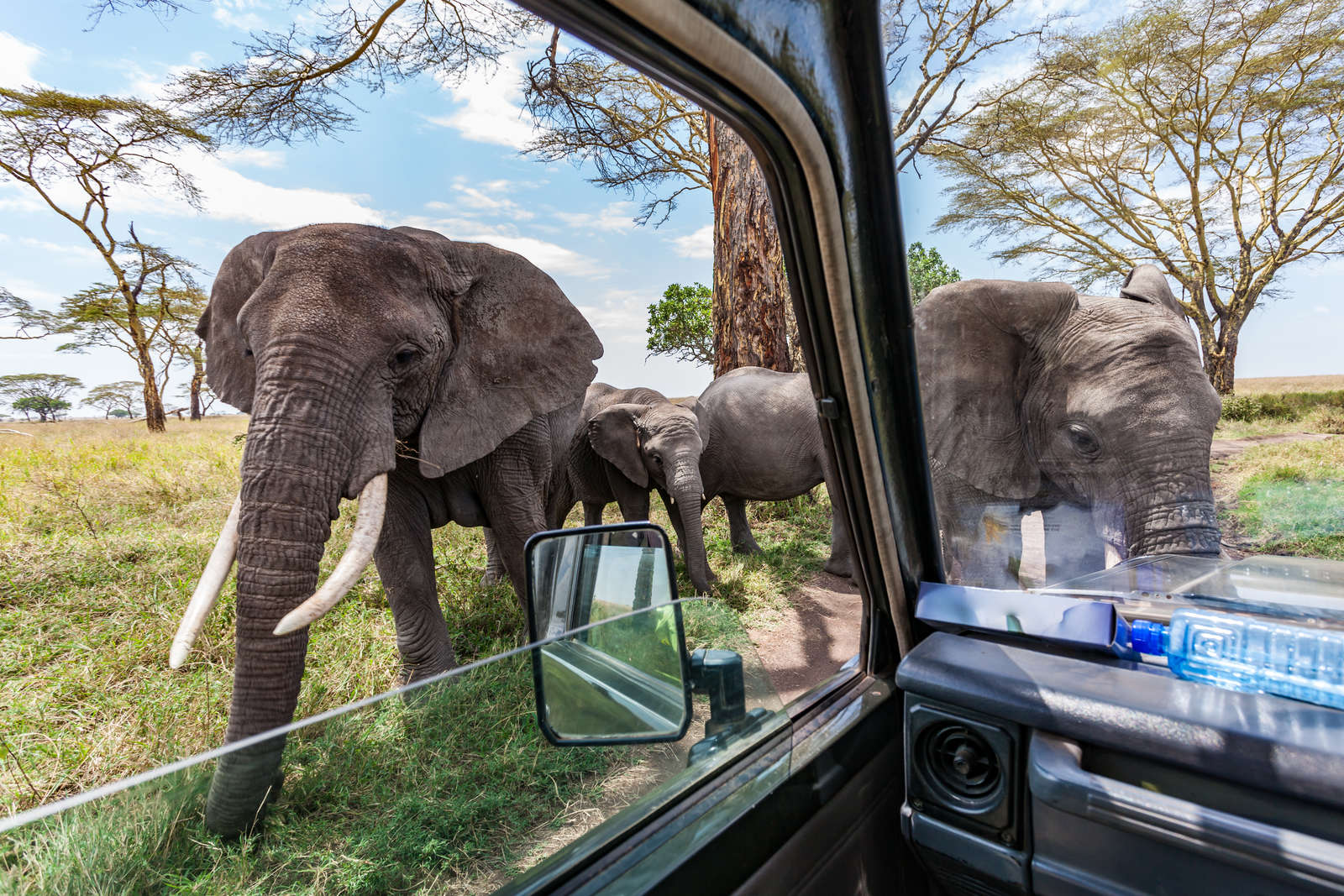
For serious wildlife photography, however, a telephoto lens is particularly useful because it allows you to photograph animals from a respectful distance.
A wider lens is also valuable because safari photography is not only about close-up animal portraits. Wide landscapes, large herds, dramatic skies and environmental portraits can create some of the most memorable images from a Tanzania safari.
The most important equipment is ultimately the equipment you know how to use confidently.
Choosing the Right Lens
A telephoto lens is useful when photographing animals that are some distance from the vehicle.
Longer focal lengths can help create detailed portraits without requiring the vehicle to approach too closely.
A medium zoom can be particularly versatile because wildlife does not always remain at the same distance. You may need to move quickly from a close animal to a wider scene showing the surrounding landscape.

A wide-angle lens is useful when the environment itself is part of the story.
For example, instead of filling the frame with an elephant, you could include the elephant, baobab trees and surrounding savannah to show the animal within its natural environment.
Photographing Wildlife Responsibly
A good photographic safari should always respect the animals being photographed.
Wildlife should never be pressured simply to produce a better photograph.
Vehicles should follow park regulations and guide instructions, and visitors should avoid disturbing animals or encouraging unnatural behaviour.
The goal is to photograph wildlife as it naturally occurs.
This is particularly important for photographers because the desire for a perfect image can sometimes encourage people to focus more on the photograph than on the animal’s welfare.
Responsible photography means that the experience and conservation of the wildlife remain more important than obtaining a particular picture.
Photography Etiquette on Safari
When several vehicles are observing the same animal, patience and consideration are important.
Avoid unnecessary noise and sudden movements, and follow your guide’s instructions about positioning the vehicle.
If another vehicle is already observing an animal, your guide may choose to wait or approach from a different direction.
A photographic safari should be enjoyable not only for the photographer but also for other visitors and, most importantly, for the wildlife.
Photography From a Tanzania Safari Vehicle
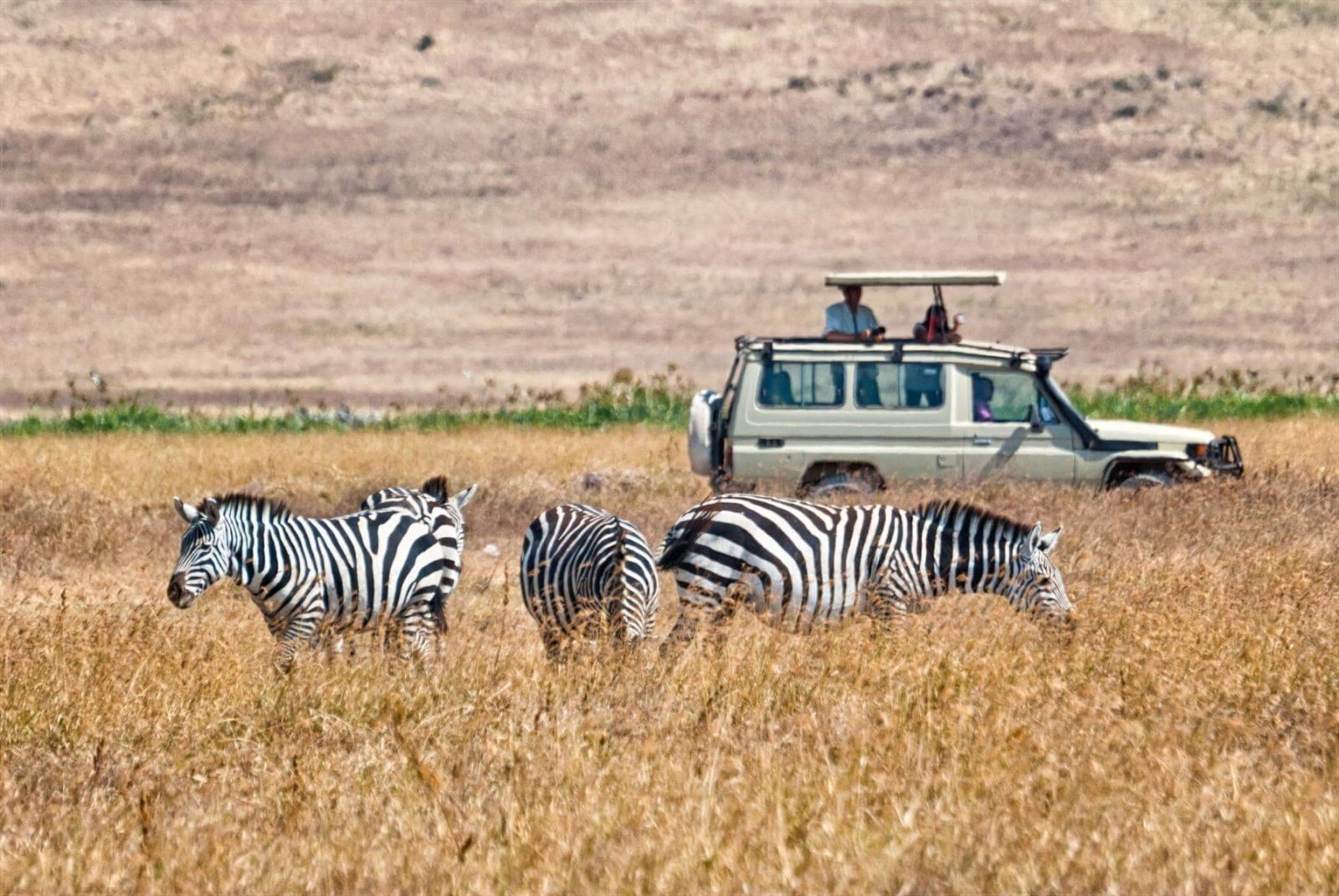
The safari vehicle itself becomes your mobile photography platform.
A good guide can position the vehicle so that you have a clear view while respecting park regulations and maintaining an appropriate distance from wildlife.
You may photograph through an open window, roof opening or other designated viewing position depending on the vehicle and safari arrangement.
Beanbags or other camera supports can also be useful for stabilizing longer lenses.
Animalia Treks and Safaris can discuss vehicle arrangements with photographers who have specific equipment or photographic requirements before the safari begins.
Private Safaris for Photographers
A private safari can provide additional flexibility for travelers whose primary interest is photography.
On a private safari, the itinerary and daily rhythm can be discussed around your interests rather than following a fixed group schedule.
If you want to spend additional time photographing a particular wildlife encounter, your guide can consider this within the park regulations and the day’s logistics.
This can be particularly useful for photographers who want to spend more time waiting for behaviour, working with changing light or photographing a particular species.
Bird Photography in Tanzania
Tanzania is also an excellent destination for bird photography.
The country’s varied habitats support a remarkable diversity of birdlife, and TANAPA describes its national parks as supporting more than 1,100 bird species.
Bird photography requires a slightly different approach from large-mammal photography.
Fast shutter speeds can help capture birds in flight, while longer lenses are useful for small or distant species. Patience is again important because birds may move quickly between branches, water and vegetation.
If bird photography is your primary interest, tell Animalia before booking so that your itinerary can be planned with suitable habitats and seasons in mind.
Landscape Photography on Safari
Tanzania is not only about wildlife.
The country’s safari landscapes can be photographic subjects in their own right.
The endless Serengeti plains, volcanic landscapes around Ngorongoro, baobab trees of Tarangire, river systems of Nyerere and woodland landscapes of southern Tanzania all offer opportunities for landscape photography.
Try to think about the landscape as part of the safari story.
A lone acacia tree, distant mountains, a herd of wildebeest on the horizon or an approaching storm can sometimes create a stronger photograph than a close-up animal portrait.
What to Pack for a Tanzania Photography Safari
Photographers should prepare for both wildlife viewing and the practical realities of spending long periods outdoors.
A camera body, suitable lenses, spare batteries and sufficient memory cards are obvious essentials. A camera bag or protective case can help protect equipment from dust and bumps, while a lens cloth is useful in dusty environments.
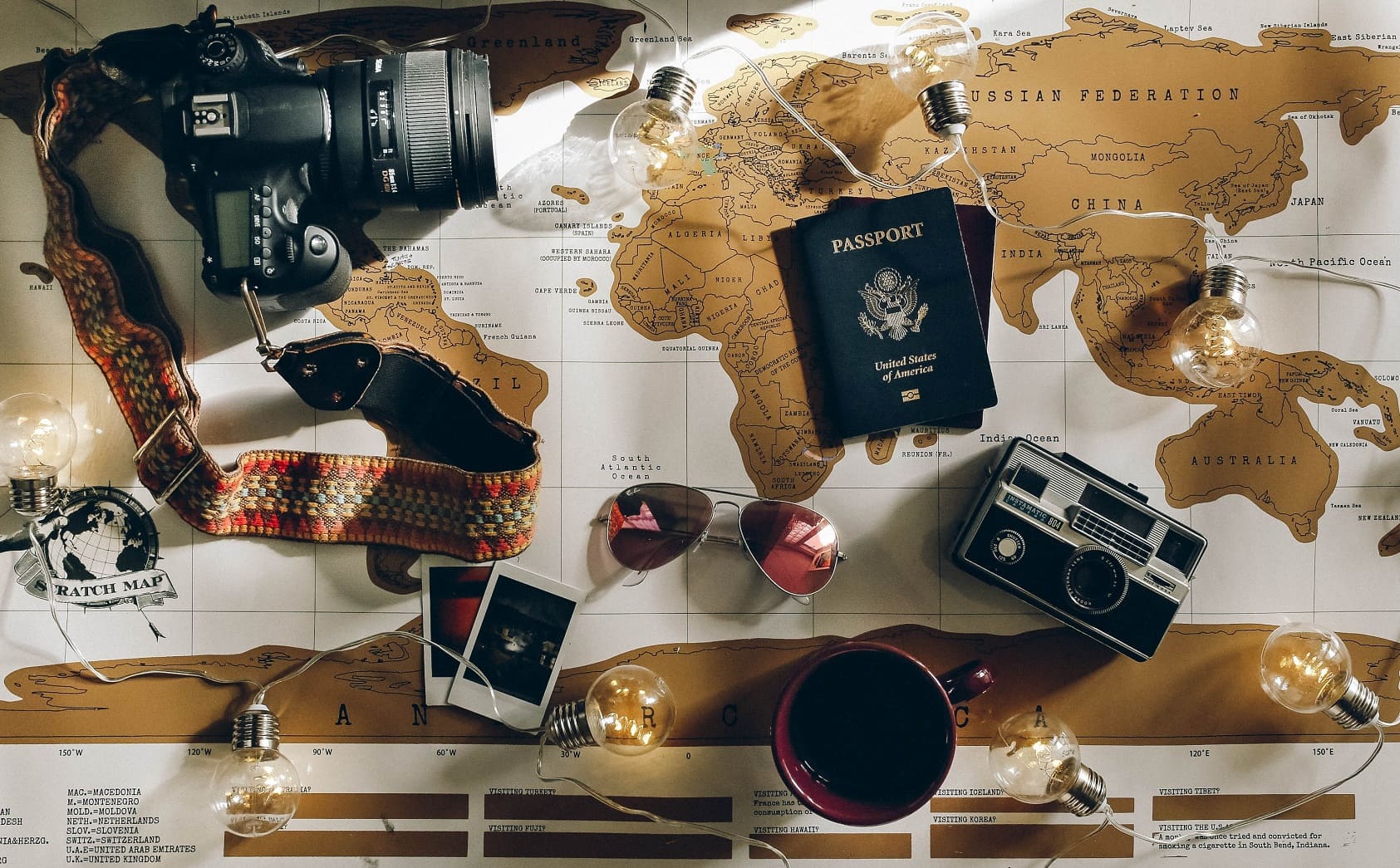
If you are carrying valuable equipment, consider how you will protect it during vehicle travel and when moving between lodges or camps.
You should also pack ordinary safari essentials such as comfortable clothing, sun protection, binoculars and suitable footwear.
The best equipment is the equipment that allows you to concentrate on the experience rather than constantly worrying about your gear.
Protecting Your Camera From Dust and Weather
Safari environments can be dusty, especially during dry periods and on some roads.
Keep camera equipment protected when it is not being used and avoid changing lenses unnecessarily in dusty conditions.
A simple cleaning kit can be useful for removing dust from lenses and equipment.
Weather protection is equally important. Rain can arrive unexpectedly, so having a simple waterproof cover or protective bag for your equipment is sensible.
Your guide and safari operator can also advise you about local conditions during the trip.
Photography Beyond the Big Five
The phrase “Big Five” is often associated with African safari photography, but Tanzania offers much more.
Giraffes, zebras, wildebeest, cheetahs, hippos, crocodiles, baboons, birds and smaller animals can all provide fascinating photographic opportunities.
Even insects, flowers, tracks and landscapes can become part of a complete photographic story.
A good safari is therefore not about checking species off a list. It is about observing the environment and looking for moments that communicate what it feels like to be there.
Combining Wildlife and Cultural Photography
For travelers interested in documenting more than wildlife, a Tanzania journey can also include cultural experiences.
With appropriate arrangements and respect for local communities, photography can extend beyond national parks to include landscapes, traditional activities, local crafts, architecture and everyday life.
When photographing people, always ask permission first and respect their decision if they do not wish to be photographed.
This approach creates a more respectful travel experience and allows photography to become a way of documenting the wider story of Tanzania.

How to Plan a Photography-Focused Tanzania Safari
The best photographic safari starts with a conversation about your interests.
Do you want to photograph predators? The Great Migration? Elephants? Birds? Landscapes? The Big Five? Or a combination of wildlife and cultural experiences?
Your answers can influence the parks, travel season, safari duration and style of accommodation selected for your trip.
For example, someone interested primarily in migration photography may require a different itinerary from a bird photographer or a traveler looking for dramatic landscape images.
At Animalia Treks and Safaris, we can help build a safari around those priorities rather than simply offering a standard itinerary.
Why Choose Animalia Treks and Safaris for a Photography Safari?
A photographic safari requires more than simply driving through a national park with a camera.
It requires time, observation, flexibility and an understanding of how wildlife, light and landscapes interact.
Animalia Treks and Safaris can help travelers plan private and customized Tanzania safari experiences based on their interests. Our team can assist with selecting destinations, arranging accommodation and transportation, planning suitable safari durations and creating an itinerary that gives you meaningful time in the wilderness.
Whether you are an experienced wildlife photographer or simply want to return home with better photographs of your Tanzania adventure, we can help you plan a safari that balances photography with the wider experience of traveling through Tanzania.
Start Planning Your Tanzania Photographic Safari
A photograph can preserve a moment, but the experience behind the photograph is what makes it meaningful.
Watching a lion appear through the morning mist, seeing elephants walk beneath enormous baobabs, observing thousands of wildebeest moving across the Serengeti or watching birds along the Rufiji River are experiences that stay with you long after the safari ends.
Tanzania provides an extraordinary setting for this kind of travel, with national parks offering different landscapes, wildlife and photographic opportunities.
If photography is an important part of your Tanzania holiday, let Animalia Treks and Safaris know when planning your trip. We can help you create a photographic safari experience in Tanzania designed around the wildlife, landscapes and moments you most want to capture.

Frequently Asked Questions About Photographic Safaris in Tanzania
What is a photographic safari in Tanzania?
A photographic safari is a wildlife-focused safari designed to give travelers opportunities to photograph animals, birds, landscapes and natural environments. It often places greater emphasis on observation, patience, light and composition.
Which is the best park in Tanzania for photography?
Different parks provide different photographic opportunities. Serengeti is known for its expansive plains and wildlife, Tarangire for elephants and baobab landscapes, Ngorongoro for its distinctive crater environment, while Nyerere offers river, woodland and wildlife photography opportunities.
Do I need a professional camera for a Tanzania photography safari?
No. You can enjoy photography with many types of cameras, including mirrorless cameras, DSLRs, compact cameras and capable smartphones. A telephoto lens can be particularly useful for wildlife photography.
What lens should I take on a Tanzania safari?
A telephoto or telephoto zoom is useful for photographing distant wildlife, while a wider lens is helpful for landscapes, large herds and environmental wildlife portraits.
What is the best time of day for wildlife photography?
Early morning and late afternoon often provide attractive natural light and can coincide with periods of wildlife activity. However, interesting photographic opportunities can occur throughout the day.
Can I book a private photography safari in Tanzania?
Yes. A private safari can be arranged around particular photography interests, allowing greater flexibility with the itinerary and time spent observing wildlife.
Is Tanzania good for bird photography?
Yes. Tanzania’s national parks support a wide range of birdlife, with TANAPA reporting more than 1,100 bird species across its parks.
Can I photograph wildlife from a safari vehicle?
Yes. Game drives provide many wildlife photography opportunities from safari vehicles. Your guide will help with positioning while following park regulations and responsible wildlife-viewing practices.
Can I use a drone during a Tanzania safari?
Drone use in national parks is subject to applicable rules and permissions. Do not assume that you can fly a drone simply because you are carrying one. Ask your safari operator about current regulations and required permissions before bringing or using a drone.
Is a photographic safari suitable for beginners?
Absolutely. You do not need to be an experienced wildlife photographer. A safari can be an opportunity to learn about wildlife photography, composition, light and camera settings while enjoying Tanzania’s natural environment.