
Kilimanjaro Rongai Route
Route Overview
The Rongai Route is one of the quieter and less crowded routes for climbing Mount Kilimanjaro, offering a unique approach to the summit from the mountain’s northern side, near the Kenyan border. Unlike most other Kilimanjaro routes that begin on the southern or western slopes, Rongai provides a different perspective of the mountain, with open landscapes, remote wilderness and beautiful views across the northern plains.
The route is particularly known for its relatively gentle gradient, drier conditions and peaceful trekking environment. It passes through forested slopes, open moorland and high-altitude alpine terrain before joining the Marangu Route for the final approach to Uhuru Peak. The Rongai Route is usually completed in 6 or 7 days, with the longer itinerary offering additional time for acclimatization and a more gradual ascent.
What Makes the Rongai Route Special?
Northern Approach: Rongai is the only major Kilimanjaro climbing route that approaches the summit from the northern side, offering a different mountain experience.
Less Crowded Trails: Compared with popular routes such as Machame and Marangu, Rongai generally receives fewer climbers, providing a quieter trekking environment.
Drier Mountain Conditions: The northern slopes receive less rainfall than the southern side, making Rongai an attractive option during wetter periods.
Gradual Ascent: The route follows a relatively steady gradient through different vegetation zones, making the hiking experience less steep during the initial stages.
Wildlife and Natural Scenery: The lower sections pass through forested areas where climbers may encounter wildlife and enjoy views of the surrounding wilderness.
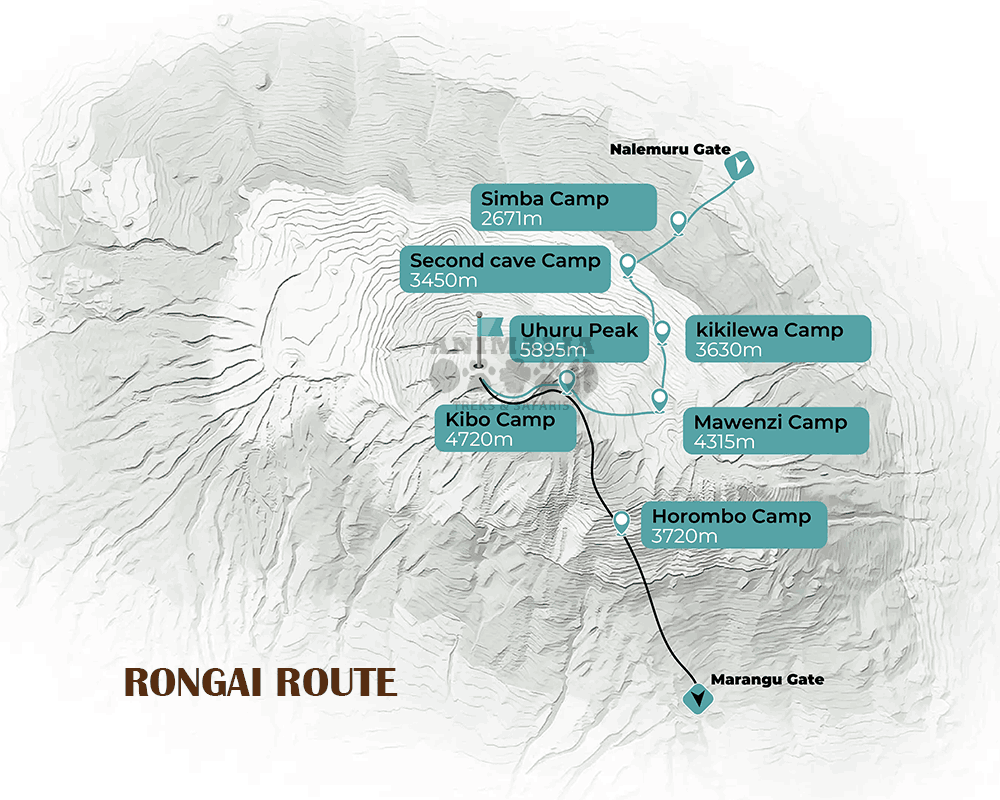
Camping on the Rongai Route
The Rongai Route uses mountain camping accommodation throughout most of the climb. Climbers spend their nights in specially designed mountain tents at designated campsites, with a professional mountain crew responsible for preparing meals, carrying equipment and arranging the camps.
The route offers a more remote camping experience, particularly during the early stages when the trail passes through the northern wilderness. As the climb progresses towards higher elevations, the camps become more exposed, with impressive views of Kilimanjaro’s rugged landscape and surrounding plains.
How Difficult Is the Rongai Route?
The Rongai Route is generally considered moderately difficult, with a relatively gradual ascent compared with some of Kilimanjaro’s steeper routes. Its early stages are less demanding, but the increasing altitude, long trekking days and final summit climb still require good physical fitness and preparation.
One of its advantages is the opportunity to climb at a steady pace through different mountain environments. However, acclimatization remains important, particularly on the shorter six-day itinerary. Choosing the seven-day Rongai Route provides an additional day on the mountain, allowing more time for altitude adjustment before the summit attempt.
The route is suitable for both first-time and experienced Kilimanjaro climbers who are comfortable with multi-day mountain trekking.
Rongai Route Quick Facts
Route Distance: Approximately 73 km
Climbing Duration: 6–7 days
Difficulty: Moderate
Starting Point: Rongai Gate
Approach: Northern side of Mount Kilimanjaro
Summit: Uhuru Peak (5,895 metres)
Accommodation: Mountain camping tents
Ascent: Rongai Route
Descent: Marangu Route
Best For: Climbers seeking quieter trails, a gradual ascent and a different perspective of Kilimanjaro.
Climb Mount Kilimanjaro via the Rongai Route
Discover a quieter side of Mount Kilimanjaro with the Rongai Route. From the peaceful northern wilderness to the spectacular landscapes surrounding the summit, this trail offers a memorable climbing experience. Explore our 6-day and 7-day Rongai Route packages and choose the itinerary that gives you the right balance of trekking time, acclimatization and adventure.
Are you ready for a trip?
Tell us where you would love to go, when you can travel and who is coming with you. We will help you turn those first ideas into a considered safari plan.